
The Journey of a Michigan Grown Flower
It starts with a plan
The journey of a Michigan grown flower all starts with planning, LOTS of it. Every July, I start seeds inside so they are big enough to be planted outside in the garden by September. Getting the flower seedlings into the ground in September is crucial so that they have time to acclimate and put down good roots before the first frost and winter hits. These flowers are the kind that are tough and can handle our Michigan winters. They hang out all winter, and once the weather begins to warm this spring, they will begin to grow again and bloom from May-June.
The local flower gap
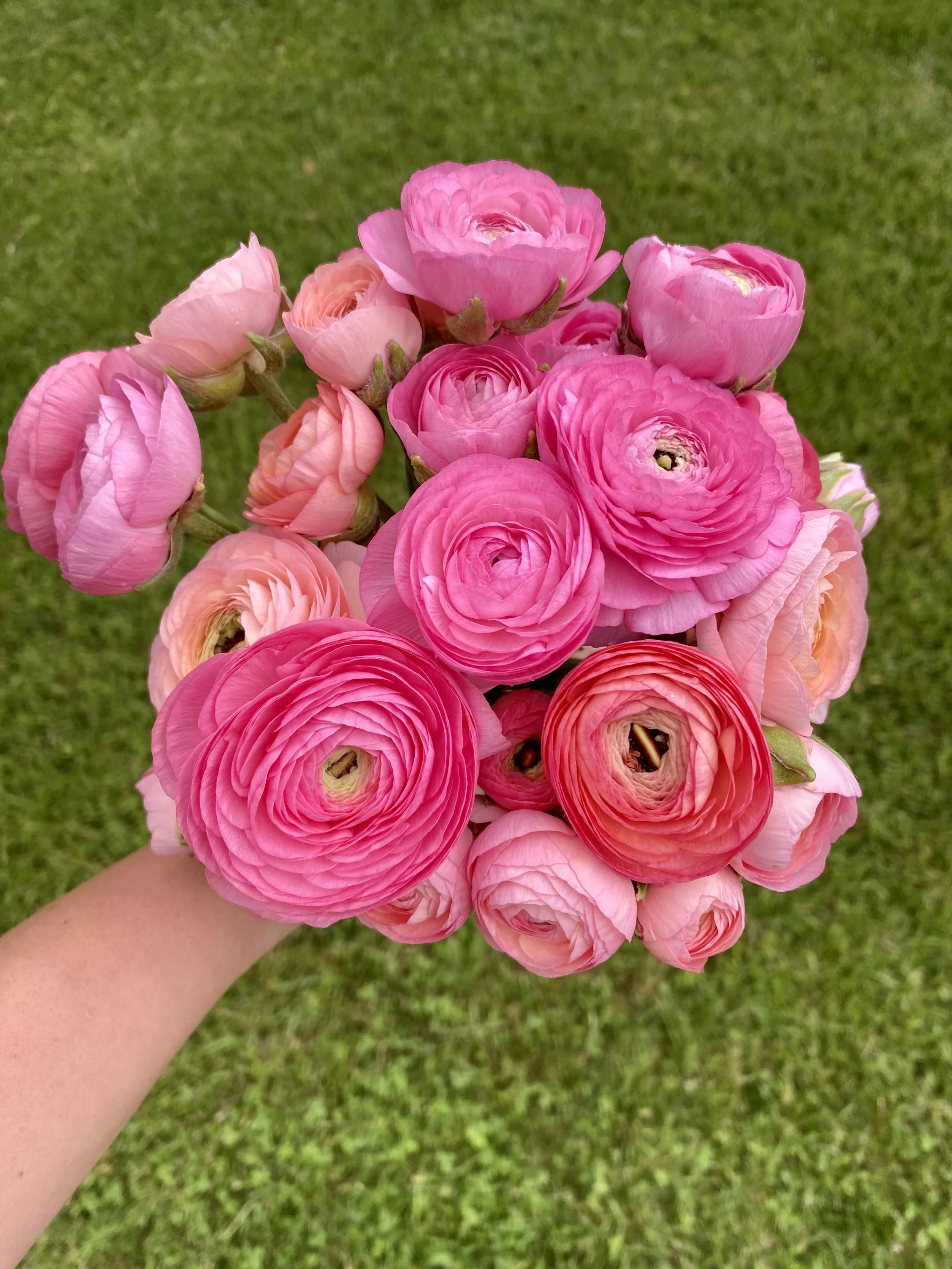
The fall planted flowers will somewhat fill that awkward June gap flower farmers often experience. You see, in Michigan, unless you have A TON of perennial flowers, it can be a little challenging having flowers bloom for cutting after the tulips are done and before the summer annual flowers bloom. This allows me to at least have some flowers while I wait for those July blooms.
In October, I order my lisianthus which always feels scary to plan and pay that far ahead for something I know I won't be planting until May and won’t see them bloom until late July/early August. During this month, I also try to get all my tulip bulbs planted into the ground before it gets too cold. I have learned that once November hits, the temps can drop off fast and remain cold for a very long time. So I try my best to have all my outdoor chores such as dahlias all dug up and stored away and tulips planted by this time.
Seeds & Field Notes
In January, after the holidays I sit down and go through my field notes from the previous season. I do my best to document what went well, what didn’t, what I never had enough of, and what I barely cut from and often found going to seed. I also look at what I ordered last season and with all that past data, I compile my order for the upcoming summer season. This usually takes me a few weeks to really nail down what I want to grow.
By February, all the seeds I have ordered have arrived and I start the organization process. I use a simple plastic craft box and group each like variety together so that when I need them for planting they are easy to find. I then create a seed starting schedule by using our last frost date and count backwards to determine when each variety needs to be started. This seed starting schedule will be my north star for most of the season in terms of when the flower seeds need to be started then planted outside into the garden. I always give myself a little wiggle room, but I really do my best to stick with the seed starting schedule.
Spring is busy and beautiful
Now, here we are in March. This is when I start seeds for the summer flower season. The first seed tray of the season always feels a little slow going at first. It’s like when you haven’t ridden a bike in a while. It feels a little weird at first, but once you get going it all comes back to you.
I continue to start seeds through April, and that is usually my first big succession of flowers that get planted into the garden in May after our last frost, which is usually around Mother’s Day.
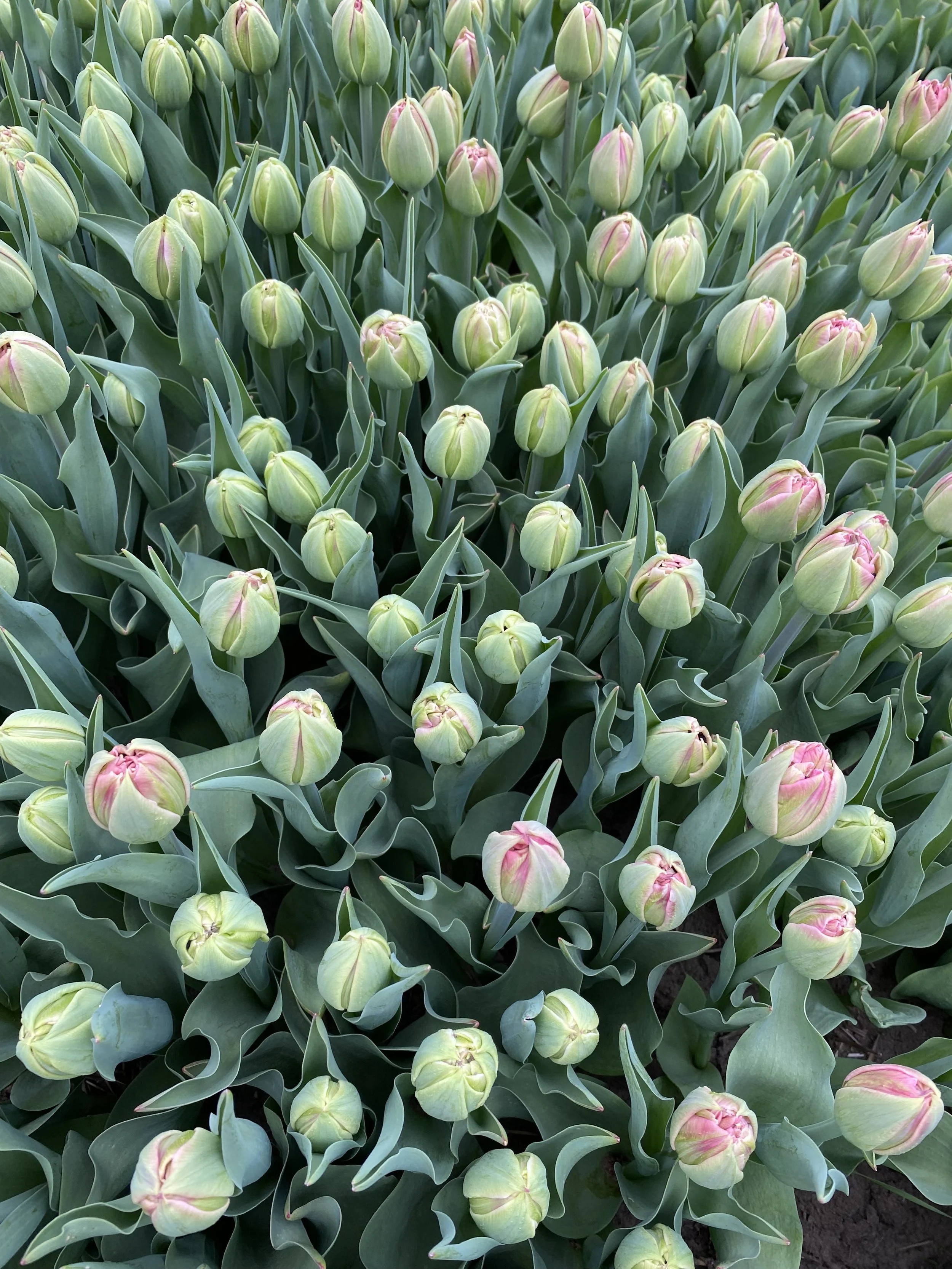
Once April hits, that's also when our tulips bloom. This is when things get a little crazy and exciting around here. Tulips wait for no one, when they are ready to be picked from the garden they are ready and you must harvest ASAP. Once a tulip is blown open outside, it’s left for the bees and cannot and should not be sold. Once a tulip is open, the vase life of that flower drastically decreases*. That's why when you get tulips from us they are closed. Single tulips can still be a little green with a touch of color while closed, but double tulips will have a little more color to them and still be closed.
During the tulip craze in April through mid-May, I am putting the flower seed trays outside everyday, slowing adding time and acclimating them to the sun and wind. This process is called “hardening off” and it's crucial for the flowers to survive outside. If I didn’t do this and just planted them directly outside, they would be very stressed, wilt, and die. I absolutely hate this process of carrying 20+ seed trays up and down the stairs twice a day, but it's a must for healthy flowers and I at least get my steps in. And if you’re wondering: yes, I have tripped and dropped trays full of dirt and flowers during this process and cried about it, ha-ha!
Sticking to the schedule
Mother’s Day is usually when we say goodbye to most of our tulips we grow. After that, it's time to plant our summer flowers outside. This is also when it’s time to start thinking about my tulip order for next spring (crazy I know). I usually do one big planting of flowers mid-May, followed by another one to two smaller plantings in June and July. This is why I stick to my seed starting schedule, because April and May get very busy, and it’s best to just have something to look at and make sure I stay on track.
June can make or break the flower season ahead
June is the slowest month, but a very important one. This is when the health of our flowers really matters. It’s when they need to be babied and given the proper hydration and care in order to produce strong, healthy flowers for cutting in July. Remember those flowers we planted back last September? Well, this is when those start to bloom. June is my favorite month for multiple reasons: it's when my kids get out of school, it’s my daughter and I’s birthday month, it’s when I can finally come up for air from tulips and planting, and it’s when we have flowers again. It’s also when the weather finally begins to feel like a Michigan summer.
July is when Michigan summer annual flowers bloom
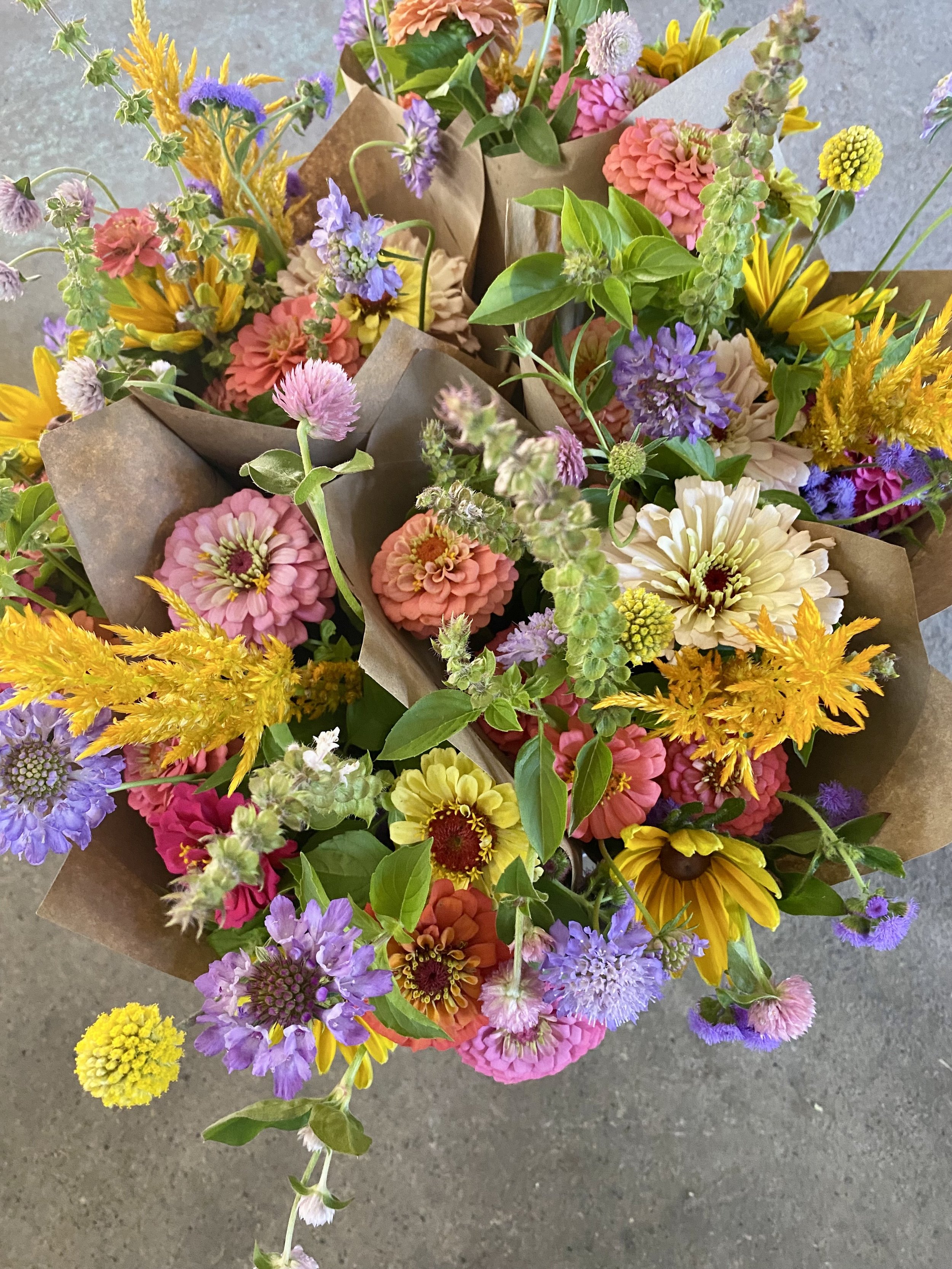
About mid-July, the first big planting of flowers we did back in May began to bloom. This is usually when our summer flower subscription starts. This is also when the work really starts to pick up again until the end of the flower season which is marked by the first frost. By August, I am usually cutting flowers twice a day, once very early in the morning and again after it cools down in the evening. Our weeks are busy cutting, arranging, and delivering flowers to our subscription members, communicating and delivering to florists, and even designing flowers for our own weddings and events. In July I am already thinking about fall planting again and what flowers I want to ‘over-winter’ for next spring.
September is last call for local flowers
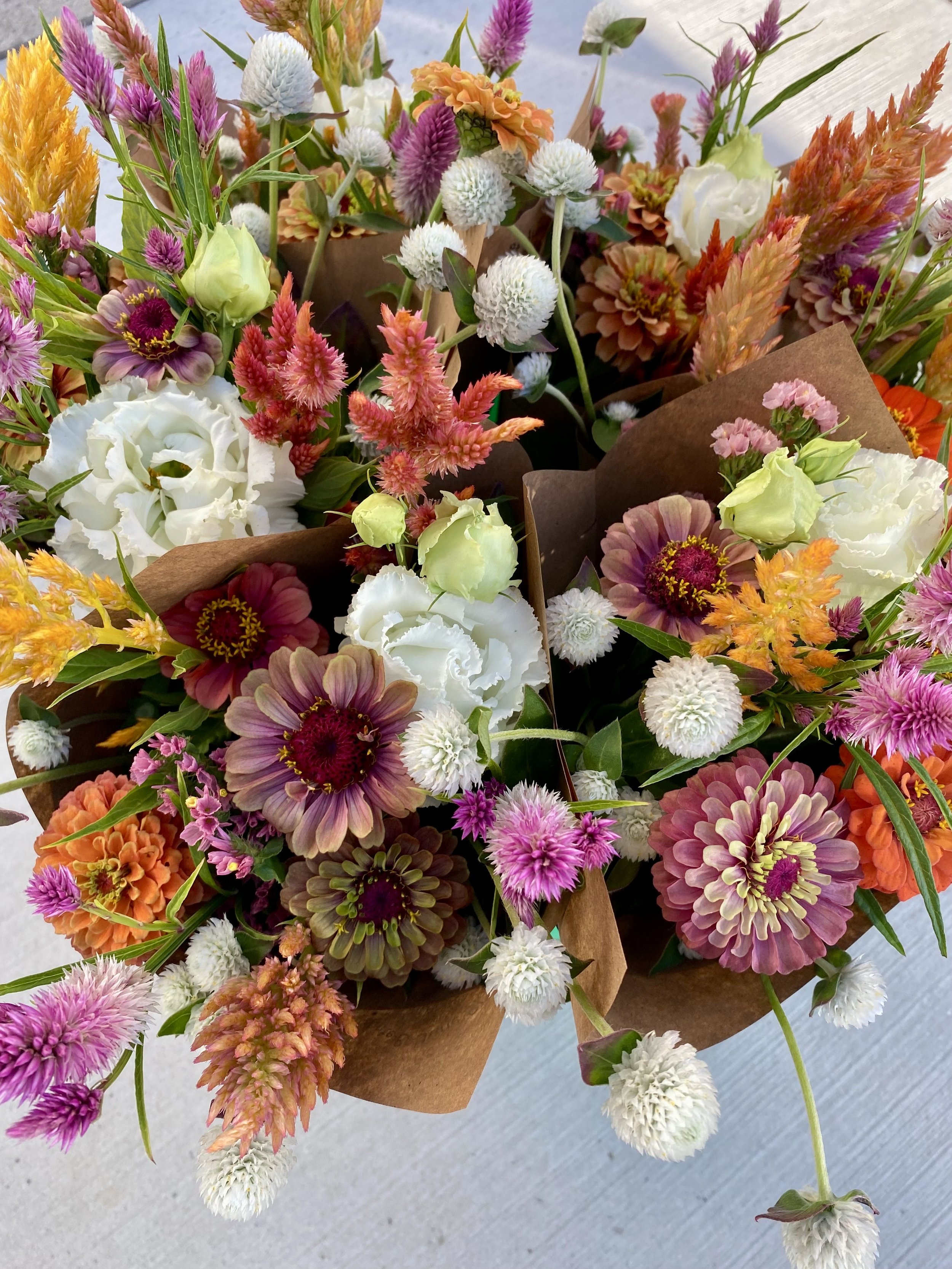
By September our fall flower subscription starts and runs for three weeks. It’s full of some of my favorite flowers we grow, and is really one of the last chances to experience our locally grown flowers until tulips the next spring. By the end of September, any flower filled days I can get I thank my lucky stars because the first Michigan frost of the season is right around the corner. I begin garden clean-up, finish up any planting, dig up dahlia tubers, and await the arrival of my tulip bulbs.
Nature’s rhythm and seasonality
Once the tulips are planted, I can rest for a little while until the cycle begins again. That is the beauty of growing flowers in mid-Michigan. Local flowers follow nature's rhythm and seasonality. It can’t be rushed. Local flowers follow the seasons the way us Michiganders do. In the winter, when it’s dark and cold, we rest and we plan. The flowers do the same, tucked beneath the snow preparing to bloom. Then spring comes, and just like us, they go towards the light.
Growing flowers has taught me to trust that rhythm and to honor the busy or slower seasons for what they are. I’ve learned that rest is just as important as growth, and you can’t have one without the other. Maybe that is the gift of locally grown flowers, not just the beauty they bring us but the reminder that we are more connected to nature than we realize. In Michigan, we adapt to the seasons. We slow down. We nurture. We speed up. We bloom. Just like the flowers.
If you’d like to experience our locally grown flowers, check out one of our flower subscriptions. Subscriptions are the best way to reserve our most beautiful blooms for yourself or a loved one. Not ready to commit? No problem—follow us on social media to stay in the loop about flower stand hours and weekly offerings.
*A side note of vase life: I always preach that flowers are a living thing and a perishable product. Once cut, the dying process begins. Each flower variety has a varying vase life. Quality matters to me, and it’s why I educate myself on the appropriate time to cut each type of flower. A cosmo will never last as long as a fresh-cut, locally grown tulip. Both are beautiful in their own way, living out different lives once cut.